千王之王重出江湖
泉城福彩“父子兵”:薪火相传,新力逐光_我的网站

一 | 方寸彩站,承载公益初心;薪火相传,续写青春答卷。
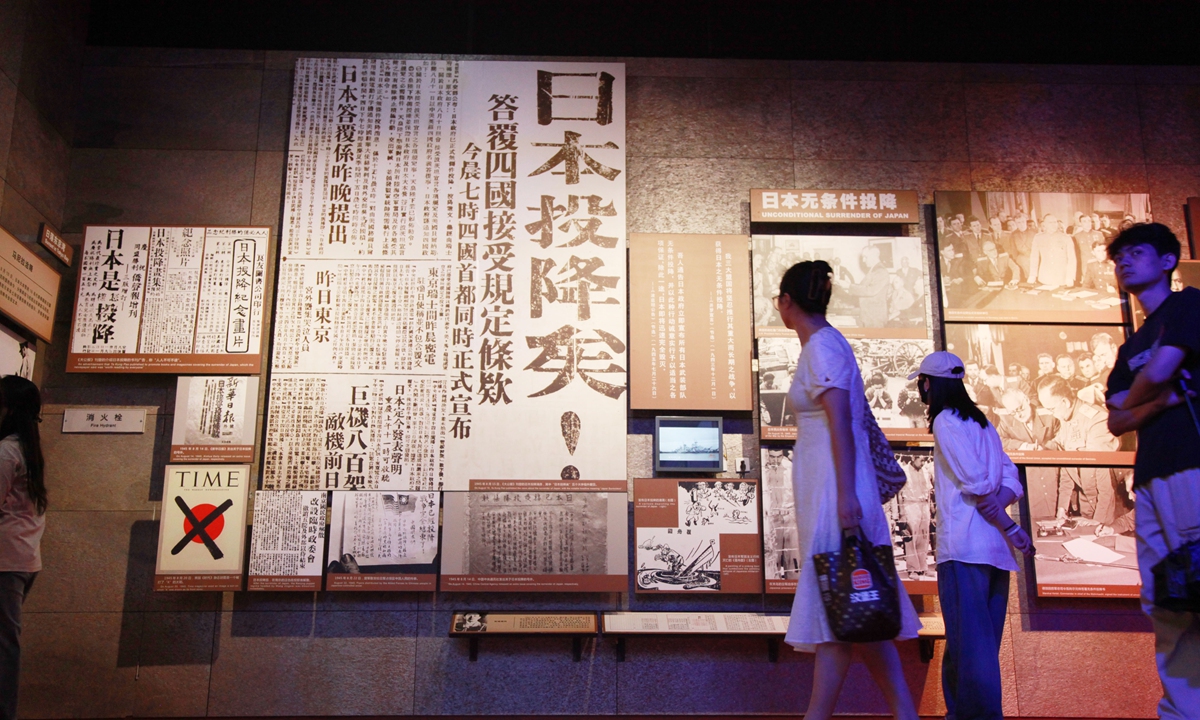
August 15 this year marks the 81st anniversary of Japan's unconditional surrender in World War II. As the main battlefield in the East for the war, China fought a 14-year resistance war at the cost of 35 million casualties. It pinned down the bulk of Japanese military forces and made indelible contributions to the victory of the global anti-fascist cause.
On this significant anniversary, French youth Marcus Detrez, his compatriot Bastien Rata, and Chinese youth Zhong Haosong will donate precious historical archives to the Memorial Hall of the Victims in Nanjing Massacre by Japanese Invaders.
Global Times reporters accompanied the trio throughout their cross-border archival retrieval mission, witnessing firsthand the handover of historical materials collected in Paris and Tokyo to archival institutions and memorial halls in Chongqing, Shanghai and Nanjing.
"Without justice, there can be no true peace," Marcus told the Global Times during his trip from Shanghai to Nanjing on Thursday.
History through multiple perspectives
A landmark handover of historical documents shedding new light on Japan's wartime bombing of China took place on August 10 at the Chongqing Municipal Archives, as Marcus and Zhong donated digital scans of 138 pages of rare materials related to the devastating Chongqing Bombing.
Compiled by Bastien from the Nantes Diplomatic Archives Centre in France, the mostly French-language files—accompanied by Chinese texts and maps—offer an unflinching third-party account of Japanese air raids on Chongqing, Chengdu and other cities between 1938 and 1941. The archives detail exact bombing dates, aircraft formations, ordnance types, civilian casualties and infrastructure destruction.
Of particular note within the archives are the Chinese and French translations of a so-called Statement of the Government of the Empire of Japan. Attached to a letter dated November 1938, the document brazenly demanded that China cease its resistance against Japanese aggression and submit to Japan's so-called "new order in East Asia", threatening military punishment if its demands were rejected.
Marking the 89th anniversary of the August 13 Battle of Songhu, also known as Battle of Shanghai, the historical preservation effort reached another milestone on August 13 in Shanghai, where youth activists presented 891 pages of invasion-era archives to Shanghai Songhu Memorial Hall for the War of Resistance Against Japanese Aggression for further research.
The archives, obtained from the Nantes Diplomatic Archives Centre, include records detailing the dates and locations of Japanese bombing raids on parts of Shanghai during the Battle of Shanghai, as well as the number of aircraft involved. The materials also cover Japan's aggression in Northeast China, the puppet state of "Manchukuo", Japanese atrocities and bombings, with some records also relating to the Soviet Union and the Korean Peninsula.
The third batch of materials, scheduled to be handed over to the Memorial Hall of the Victims in Nanjing Massacre by Japanese Invaders on August 15, was brought back from Japan last week by Marcus, Zhong and others. During their trip, they visited several WWII archival collections and secondhand bookstores in Tokyo, uncovering more than 50 items weighing about 20 kilograms, including pictorials, publications, books and photo albums dating mainly from 1932 to 1945. The materials cover the Nanjing Massacre and Japan's preparations for launching the July 7th Incident, among other topics.
Among the finds was a book titled The Nanjing Front, which documents events related to the Nanjing Massacre despite not mentioning the massacre in its title. They also found photos taken by Asahi Shimbun of Japanese air raids, as well as images of the Great Wall after it was damaged during the Japanese military's occupation.
"These archives should go where they belong," Zhong told the Global Times.
'Guarded' Japanese collectors
In France, archival research was a race against time. Bastien told the Global Times that they had only four days to work at the French diplomatic archives in Nantes. Each person could access no more than six boxes a day, or 24 boxes over four days. Some contained as many as 10,000 to 20,000 pages, while only 10 to 20 percent might relate to Japan's war of aggression against China. "We had to go through the pages one by one, quickly identify anything relevant and scan it immediately," Bastien said.
The team then spent nearly a month organizing the material, working about eight hours a day. They also developed an AI-powered system to translate and classify the records and extract information on dates, locations, people and events, while linking the French diplomatic archives with photos and notes left by Marcus' grandfather.
Finding wartime records in Japan posed a different challenge. Much of the material is not publicly catalogued online, so the team had to visit collectors one by one and keep asking specific questions.
"The biggest challenge is that many Japanese collectors are cautious about what we are looking for. Some know these materials exist but choose to avoid the issue, while others have clues but are unwilling to share them," Zhong said.
The team visited one Tokyo collecting institution twice. Despite explaining during their first visit that they were looking for wartime materials from the 1930s and 1940s, the collector initially showed them only ordinary photos of Japanese soldiers. The team then changed its approach, asking why many Japanese WWII records contain gaps concerning China. The collector said Japan generally refers to the conflict as the "Sino-Japanese War," rather than Japan's war of aggression against China. The team pressed further, asking whether there were records related to Shanghai, Nanjing or Chongqing. Only then did previously unseen materials gradually emerge.
The team also cross-checked promising finds with Chinese institutions, including the the Memorial Hall of the Victims in Nanjing Massacre by Japanese Invaders, and traced their provenance. One photo album, for instance, came from the family of a Japanese soldier and still contained the photographer's details and names of people pictured.
Anchoring hard-won peace
In early August, Marcus and Zhong stood at a busy intersection in Tokyo's Shibuya district, dressed in black and holding Japanese-language banners urging Japan to confront its history of aggression, including the Nanjing Massacre. They spent about three hours raising awareness on the street. Some foreign tourists stopped to ask what had happened, while some Japanese passersby tried to stop them.
There was also support. A Japanese female blogger livestreamed the event, saying she wanted to share the truth and promote peace. Japan's refusal to face its wartime history and apologize, was "irresponsible," she said.
"Our long-term goal is simple: to let the world see the truth of history," they told the Global Times.
Zhao Yongsheng, a professor at the Institute of Regional and International Studies at the University of International Business and Economics in Beijing, said the growing involvement of international friends in uncovering Japan's wartime history and preserving the truth carries unique value. It not only helps safeguard historical truth, but also challenges long-standing Western biases and neglect of the Eastern theater of World War II. More importantly, it demonstrates that exposing wartime atrocities and defending peace and justice are shared moral responsibilities of humanity.
"There are concerns that confronting Japan's wartime past could create new instability in Asia. In fact, the opposite is true," Zhao said. "Germany became a 'stabilizer' in Europe partly because it confronted its Nazi past. In Asia, only by fully confronting Japan's wartime crimes and curbing the ambitions of right-wing forces can the region escape the shadow of militarism and achieve lasting peace and development."
Regarding the newly recovered materials, an official with the Shanghai Songhu Memorial Hall for the War of Resistance against Japanese Aggression told the Global Times that experts will first authenticate the archives before their formal handover. Zeng Jin, deputy director of the Chongqing Municipal Archives, said the materials would complement existing collections and provide new evidence for research through third-party perspectives from foreign governments and societies.
。在济南福彩队伍中,有这样一对特殊的“父子兵”,父亲深耕行业近二十载,坚守初心、沉淀匠心;儿子学成归来、跨界入行,以青春新活力解锁福彩经营新模样。一老一少、一守一新,两代福彩人并肩前行,在平凡的岗位上演绎着传承与突破的温暖故事。二十年匠心耕耘,筑牢公益根基父亲马同岭是济南福彩行业的资深从业者,自2007年起,便扎根37010206号福彩销售网点,与一张张彩票、一位位购彩者朝夕相伴,一晃便是近二十载春秋。

二 | 二十载朝夕耕耘,马同岭始终秉持福彩“扶老、助残、救孤、济困”发行宗旨,踏实经营、真诚服务。多年的一线经营经历,让他积累了丰富的经验,也让他深知福彩销售的底层逻辑,除了熟悉各类票种玩法特性,更需要懂得倾听购彩者需求、维系客户口碑。在他的用心经营下,网点客源稳定、口碑良好,凭借规范的操作、耐心的服务和靠谱的信誉,稳稳守住一方公益阵地,成为周边居民信赖的福彩网点。

三 | 青年学成归来,接续福彩初心父辈坚守的公益初心,早已悄然在晚辈心中埋下了希望的种子。马同岭的儿子马安梁在大学期间就积极参与省市福彩中心组织的“青春创业”体验活动,对福彩的公益属性有着深刻的了解。去年顺利完成大学学业后,站在人生择业路口的他没有选择传统岗位,而是毅然选择追随父亲的脚步,投身福彩事业。在很多人看来,福彩经营琐碎且平凡,但在马安梁眼中,这方寸小店不仅是一份事业,更是传递公益温暖、实现自我价值的平台。这份兼具温度与烟火气的职业,让他满心热忱、倍感珍惜。父辈倾囊相授,新人快速成长初入行业的马安梁,虽有一腔热情,却缺乏售彩经验。关键时刻,父亲马同岭化身最好的引路人,毫无保留地将积累多年的销售技巧、服务心得倾囊相授。

四 | 从票种讲解、购彩答疑,到客户接待、门店运维,再到合规经营的细节规范,父亲细致点拨、手把手指导,帮儿子快速了解行业现状、规避经营误区。在父亲的悉心教导下,马安梁逐渐熟悉福彩经营全流程,稳稳扛起了新店的经营重任。跳出传统模式,探索年轻打法传承不止墨守成规,坚守更需创新突破。深耕行业多年的父亲,经营风格沉稳务实、稳中求进,而年轻的马安梁则自带新时代青年的创新思维与鲜活思路。投身福彩行业后,他并未一味沿用父亲的传统经营模式,而是紧扣当下市场趋势与年轻群体喜好,摸索出一套独属于自己的年轻化经营路径。马安梁注重门店氛围的优化升级,精心打理店面环境,打造干净整洁、轻松舒适的购彩场景;他擅长用年轻化、接地气的方式科普福彩公益属性,用通俗易懂的语言传递公益彩票的理念;同时,他积极对接年轻客群喜好,主动贴近新生代购彩者的购彩习惯与需求。新潮的经营模式、充满活力的服务态度,让37010434号网点迅速走红,越来越多的年轻购彩者慕名而至,逐渐成为网点的购彩主力军。马同岭、马安梁这对泉城福彩“父子兵”,是福彩行业代代传承的缩影,也是老、中、青力量接力奋进的写照。父亲以二十载坚守筑牢公益根基,用匠心诠释责任与担当;儿子以青春锐气激活行业活力,用创新突破书写新生代福彩人的风采。
Current article:http://0ffck2s.ruwentaqintiaozhupapaigai.shop/c78ofrm/20260826/537465.html
Published on:21:47:35


