Former Afghan interpreter says Taliban tortured him for weeks but U.S. still won't give him a visa_我的网站
A | 过去看病,需要带着各种就诊卡,想挂专家号,天不亮就得到医院排队。
B | 如今,坐在家里打开医院公众号,就能分时段精准预约专家号,等时间快到了再去医院就诊、付费、取报告……整个就医过程,一部手机搞定。
全新的就医场景,得益于智慧医疗的加快推进,更得益于健康辽宁建设“加速跑”。
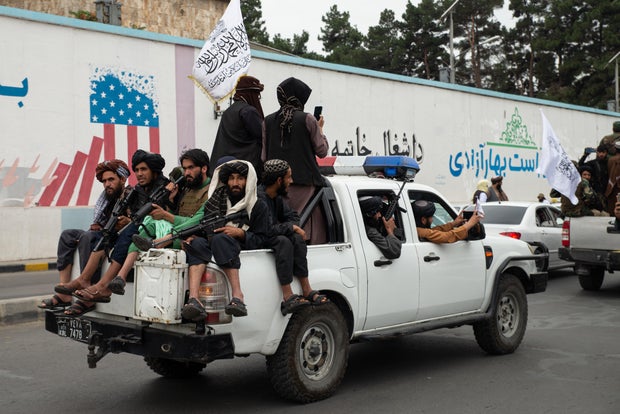
健康是幸福之基。 As Massoud walked down a Kabul street one cold Sunday morning, looking for a day job to feed his family, pickup trucks full of armed Taliban members stopped in front of him. He told CBS News the men aimed their AK-47s at him, he was handcuffed, blindfolded and taken to an office of the Taliban's General Directorate of Intelligence.For more than a month, Massoud's family had no idea where he was. They searched everywhere, including hospitals, until they arrived at the Taliban's intelligence department. "After six weeks of searching, they found me at the Taliban's 040 intelligence department," Massoud told CBS News in a phone interview. He said during the first 15 days of his imprisonment, he was "beaten, struck with electric shock sticks, electrocuted, waterboarded and hanged upside down."Taliban members ride in a pickup truck during a celebration of the first anniversary of the Taliban's return to power, August 15, 2022, in Kabul, Afghanistan. Nava Jamshidi/Getty His crime? Massoud worked for the U.S. military as an interpreter from 2011 to 2013, including a year spent working with U.S. Navy SEALs. (CBS News is not using the real name of Massoud or the other former interpreter interviewed for this story to protect them from possible retaliation.)
"Don't want to see that horror again"
Massoud said that during interrogations, Taliban intelligence officers told him that, "with my help, the Americans have killed our people, and that I was still spying for the Americans.""I told them, 'You have announced a general amnesty,'" Massoud told CBS News, but he was informed by the Taliban interrogators, "there is no amnesty for you people."
Massoud was finally released by the Taliban after more than three months of imprisonment, after his brothers signed two separate guarantees promising the Taliban they would bring him back to the intelligence agency if ever asked to do so. CBS News has seen the letters and other documents his family filed with Taliban officials while he was imprisoned."They can find me anytime they wish and put me back in the prison," he told CBS News. "I just don't want to see that horror again."
"Still in danger"
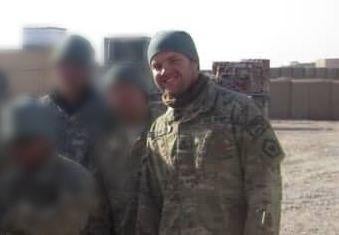
U.S. Army Sgt. Jordan David Johnson, who has since been honorably discharged, was Massoud's direct supervisor in Helmand province and has written to members of the U.S. Congress supporting his former Afghan colleague's application for a U.S. visa, but to no avail. "Every time I hear from Massoud I feel guilty, because he is still in danger," Johnson told CBS News. "We told them that, 'You help us, and we will help you.' But now we are not, and that is wrong."U.S. Army Sgt. Jordan David Johnson (right), who has since been honorably discharged, is seen during his deployment in Afghanistan's Helmand province, with his Afghan interpreter Massoud (top left) and others. Photo courtesy of Jordan David Johnson In a September 2022 letter to lawmakers, Johnson said he trusted Massoud then, "and I am proud to call him a friend today," adding that he did not believe the Afghan "poses a national security threat to the United States of America."
"They will come after me and my family"
Omar, 32, told CBS News that he worked with the U.S. military from 2008 until 2012 and was deployed alongside U.S. troops in eastern Paktia province. From 2012 until Afghanistan fell back into the Taliban's hands in August 2021, he worked on various projects with the U.S. Agency for International Development (USAID) at the U.S. Embassy in Kabul. He was threatened many times for working with the U.S. and was injured in what he believes was an assassination attempt in 2014, after he filed for a U.S. visa.
Afghan women who served with Americans fight for U.S. residency 2 years after Taliban takeover03:05Despite the threats, which he continued reporting to his supervisors at the embassy, Omar was informed that his U.S. Special Immigration Visa, or SIV, application had been rejected because documents he submitted previously had been deemed fraudulent. He believes it's because he failed a polygraph administered by U.S. officials eight years earlier, and that the process was unfair. "They intentionally make you a criminal," he told CBS News. "You are only allowed to answer their questions with yes and no, and they don't give you a chance to explain." Omar filed an appeal against the rejection of his application in mid-June and is waiting for a response. He urged the U.S. government to "seriously look into our cases and take us into safety," adding that if it doesn't happen, "they will come after me and my family one day."
"Absurd that it takes so long"
During the 20-year war that followed the 2001 U.S.-led invasion of Afghanistan, thousands of Afghans served as interpreters and translators, working shoulder to shoulder with U.S. troops and diplomats, risking their lives serving on the battlefield and communicating with locals.
These interpreters were essential to bridge the language barrier, but also to provide cultural context, gather intelligence, negotiate with tribal elders and build trust with local communities. Massoud and Omar both applied for SIVs under a program created by the U.S. Congress in 2006 to offer legal pathways to the United States for Iraqis and Afghans who helped during the U.S. military operations in those countries. But the bureaucracy of the SIV application process has left many applicants frustrated, with little faith in the program.Massoud said his application was rejected due to a lack of documentation from his supervisors, despite Johnson trying to help. He said he submitted the requested documents and has waited for more than 320 days with no update from the U.S. government. "Every time Massoud submits all his documents and we think, 'now we are waiting for his visa to be approved,' then Massoud would contact me again saying, 'I need this and this document, because they keep changing the requirements,'" Johnson said.
The backlog, and work to improve a "vital program"
"We have surged resources to this vital program, significantly increasing the number of staff dedicated to it. We have reviewed every stage of the multiple step application process to streamline it wherever possible, consistent with U.S. law, and continue to look for areas to improve," a State Department spokesperson told CBS News.The official said the steps had enabled the State Department to issue "nearly 34,000 SIVs to principal applicants and their eligible family members" from the beginning of the Biden administration until August 1, 2023.
As of the end of March, State Department figures show about 9,800 principal SIV applicants had cleared a major hurdle in the process, securing Chief Of Mission (COM) approval. Those individuals are "awaiting further processing and their eventual visa interview before being issued an SIV," the spokesperson said, adding: "We are working to process these cases as quickly as possible."The State Department's figures show that another 69,000 principal applicants were undergoing the review process, and the spokesperson told CBS News that, historically, about half of the applications who reach that stage of the process do not end up qualifying for an SIV.According to the figures, 3,241 Afghan applicants were "deemed unqualified to receive COM approval or had the approval revoked during the second quarter" of 2023."The Department will continue to ensure Afghan SIV applications are processed as quickly as possible in accordance with the statutorily required program parameters and national security requirements," the spokesman told CBS News. A report issued this week by a State Department inspector general said, meanwhile, that according to the department's own estimation, as of April 2023, a total of "more than 840,000 principal and derivative SIV applicants remained in Afghanistan."CBS News' Tucker Reals and Paulina Smolinski contributed to this report.
C |
百姓看病最希望的是在“家门口”就能看好,为此,我省以紧密型县域医共体建设为抓手,优化乡村医疗卫生机构布局,加强县域内资源整合和优化配置,改善基层基础设施条件,构建起优质高效的新型县域医疗卫生服务体系,织密织牢健康服务网底,提升县域综合医疗卫生服务能力。如今,全省46个县(县级市、有条件的市辖区)均已开展县域医共体建设,百姓小病小痛不用再跑大医院,就近就能享受优质医疗资源。
D |
为进一步提升疑难危重症诊治能力,近年来,我省致力于打造全国医疗卫生高地。
E | 按照国家规划部署,积极创建国家区域医疗中心和国家综合类医学中心,遴选确定8个省级综合类区域医疗中心。清单化、项目化、工程化推进实施健康辽宁重点项目113个,带动全省医疗服务能力均衡发展。目前,落户我省的国家儿童区域医疗中心和国家肿瘤区域医疗中心项目建设均取得阶段性进展。
在公共卫生方面,我省始终不断健全疾病预防控制和公共卫生体系,特别是党的十八大以来,全力开展传染病防控工作,成功控制或消除了一批威胁人民健康的重大疾病。不仅如此,我省还建设了覆盖全省的数字化接种门诊网络和疫苗接种管理平台,实现疫苗全程追溯;建成省、市、县传染病卫生应急队伍119支,卫生应急队伍能力进一步提升;成立省疾病预防控制局,疾控机构职能从单纯预防控制疾病向全面维护和促进全人群健康转变。传染病、慢性病、职业病、地方病防控更加有效有力。
随着经济社会发展进步,人们的健康观念也发生了改变——从注重“治已病”转向“治未病”。中医药以其“简便验廉”特色优势,既可以治病又可以防病保健,成为我省推进健康辽宁建设的有力抓手。近年来,我省加快建设中医药强省,持续推进中医药传承创新,建立系统的中医药人才培养体系,优质高效的中医药服务体系基本建成。到2023年底,我省已设置中医馆1371个,实现基层医疗卫生机构全覆盖。特别是近一段时间,我省多地举办的中医药夜市更是频频火爆出圈,开启市民从治病到防病的养生新观念。
健康路上,一个也不能少。一直以来,我省以“一老一小”为重点,不断完善人口服务体系。面对少子化、老龄化、区域人口增减分化的新形势,我省逐步完善生育支持政策体系、老年健康服务体系和普惠托育服务体系,推动建设生育友好型社会,促进人口高质量发展。
F | 如今,全省63%的二级及以上综合性医院开设了老年医学科,1473家医疗机构建成省老年友善医疗机构,每千人口拥有3岁以下婴幼儿托位达到3.2个。
G |
75年风雨无阻,75年砥砺前行。
H | 站在新起点,我省更加突出卫生健康服务的系统性、连续性,努力建设与中国式现代化相适应的体系完整、分工明确、功能互补、连续协同、运行高效、富有韧性的整合型医疗卫生服务体系,不断增进全省人民健康福祉,为辽宁实现全面振兴新突破奠定更坚实的健康之基。
健康,让群众生活更幸福!
记者感言:
健康是幸福生活最重要的指标。随着生活水平的提高,人们对医疗卫生服务期待越来越多、标准越来越高。
始终坚持以人民健康为中心,我省卫生健康系统围绕群众看病就医“急难愁盼”,加快优质医疗资源扩容,持续扩大优质医疗资源供给,加快医疗资源区域间合理布局,推动卫生健康事业高质量发展。
提升医疗卫生服务能力,满足人民群众健康需求,只有进行时,没有完成时。我们需要保持“时时刻刻冲刺、久久为功远征”的心态,注重以发展思维看待补齐卫生健康事业短板问题,勇于开拓创新,切实做到“民有所呼、我有所为”。唯有如此,才能筑牢人民群众健康防线,不断满足百姓的高品质健康需求,持续提升人民群众获得感、幸福感。
责任编辑:李丹。
Current article:http://0ffck2s.ruwentaqintiaozhupapaigai.shop/a7dt02/prah.html




 中国石化在四川发现储量3878亿立方米页岩气田
 上海金融服务直达“创新源头”,上海金融服务直达“创新源头”
 【悦园资讯】互通互鉴 同研共思
 122“全国交通安全日”文明交通倡议书
 赞皇法院开展“全国生态日”普法宣传活动
 丰台女购彩者喜中大乐透一等奖